Many of us know from experience that the most memorable and enjoyable parts of participating in a conference are the tea and coffee breaks, the conversations lunches and dinners, the informal chats outside of the conference room while the meeting is still happening, and the late-night hangouts with other participants. Genuinely good conversations take place and relationships are formed or renewed in those moments. So why don’t we recognise what is obvious, and create structures that bring out these experiences?
Social movements rely on purposeful gatherings to connect, share experiences, and strategise. We do this so often we should be really good at it. But more often than not, things do not seem to quite work. This has prompted me to reflect, and then test my impressions with other conference-goers who turn out to be feeling much the same ways. I need to first acknowledge how much unseen labour goes into any event planning; the event organisers are the most invisible if everything goes well. But it is necessary to recognise and name things that do not seem to work.
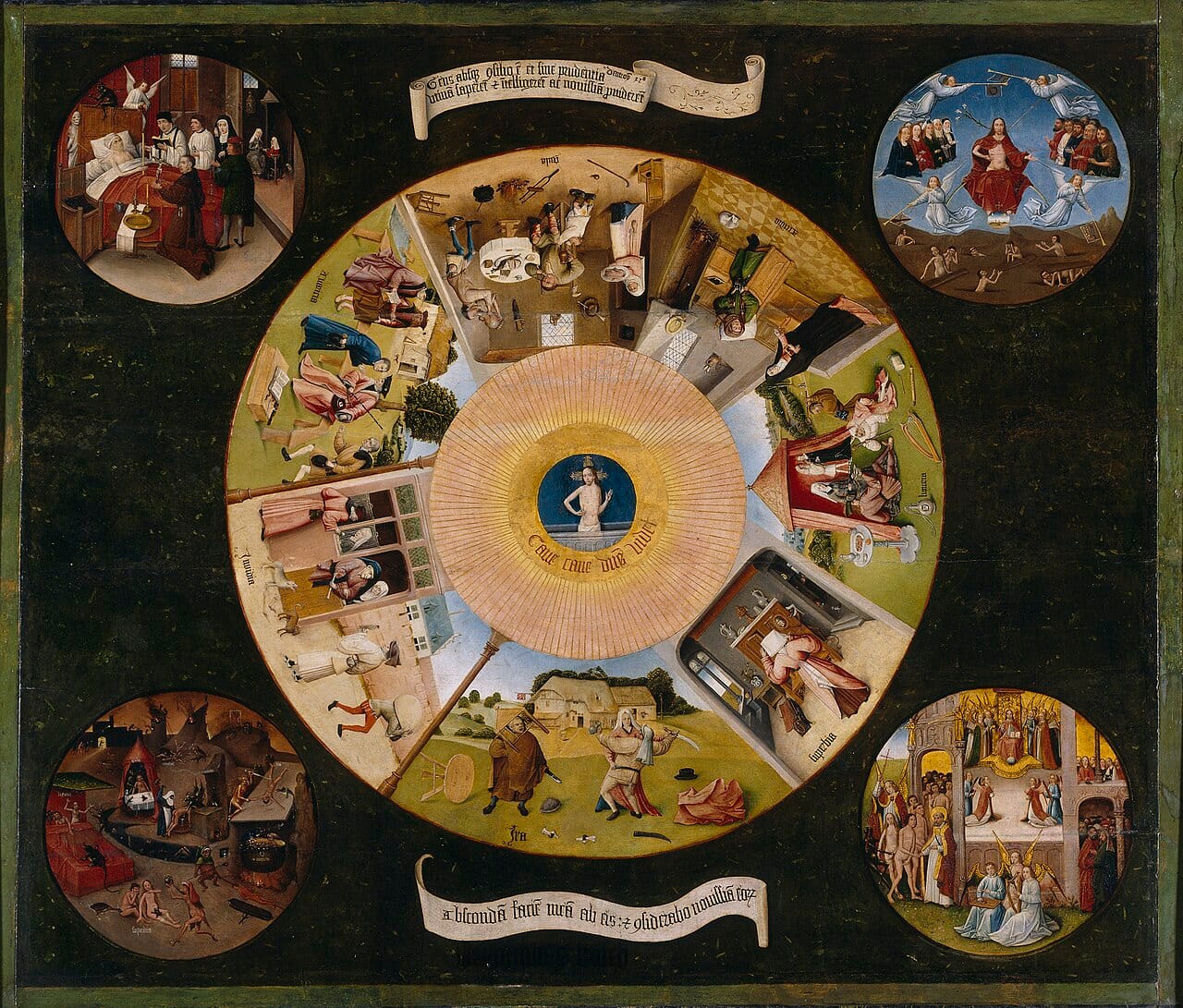
Here are the seven deadly sins of conference organising. I want to speak to my fellow conference organisers: of course, not all of us committed all of the sins, and some of you have done much better. But many of the sins would sound familiar to us, and we often let our guards down. By naming them, we may do a better job at avoiding them, and get to organise and experience more effective, creative and joyful gatherings.
Greed
The first sin is greed. We are often greedy about what can be accomplished with a gathering, especially with sizable conferences. We want to invite many people to be there to meet and connect, while also want them to have substantial discussions.
A medium to large conference of dozens to a few hundred people is amazing. But it is not primarily a place for deep learning or for substantial conversations despite our best efforts and most sincere wishes. There are simply too many sessions, too many speakers and too many people to learn and engage deeply. We listen to one panel after another and hardly remember anything from each speaker, while facilitators apologise for running out of time and no more time for questions. We then try to have conversations during breaks that on average last for 5 to 10 minutes before rushing back to the next session or talking or introducing ourselves to someone else. You should not feel alone in experiencing this.
We know deep learning and substantial conversation are most likely to take place in much smaller meetings. You may really have to keep it to a very small number of participants, arguably no more than 10 or 15 but maybe even fewer, to have sustained conversations that give everyone time to think, allow ideas to develop, and for them to build on each other’s ideas.
The medium and large conferences serve other important goals: it is good for building new relationships or renewing old ones, for feeling part of a larger movement with many others with shared values and goals, and for experiencing the optimism and joy of movement-building. It is good enough to take away with you the connections you have made, a sense of the movement’s diversity and creativity, and the fact that people are doing the best they can under enormous pressure and risk.
If these are the realistic goals, then our task is to structure the events in ways that let people and ideas to breath, to have both structured discussions and unstructured time for spontaneous conversations, and to make these events into festivals.
Busyness
The second sin is busyness. Far too often, I have been in conference planning where the logistics – the venue search and booking, the travel arrangement, the drinks, snacks and meals, and the interpretation – take up most of the planning time. We end up spending very little time discussing and experimenting with the actual program. In fact, the program design at times feels like an afterthought.
The logistics discussions and preparations are often not completely done until the very last minute. Time for a program discussion tends to be squeezed in between logistics discussions. When we are tight on time, we tend to revert to the familiar and the safest: let us get these speakers speakers for these panels, and each speaks for 15 minutes. It is the least that can go wrong. No one can claim they love this, but we keep doing it anyway.
It may be worth aiming to reserve a substantial amount of time at the beginning of the planning process, before our attention is pulled into the necessary logistics work, to talk about what kind of event we want to see and enjoy, and how we might do it differently and more creatively. Our own creative ideas take time to form and develop, and we are more willing to try out new things when we feel more relaxed and less rushed.
Distrust
The third sin is distrust. One very specific memory at a workshop has stuck in my mind for years. One of the most impressive union organisers in Asia, with more than a decade of experience organising militant struggles, sat and hardly said anything over a two-day workshop. It is not because the union leader lacks eloquence; in fact, having spoken with the leader at length before, I find the leader very articulate and have a lot of interesting things to say. The workshop used elaborate facilitation techniques and games, breakout groups, and brainstorming sessions, which were intended to open up conversations; but they ended up closing off genuine, deep, and reflective ones.
I have been wondering why this happened. Then I remember feeling anxious as an conference organiser to plan and over-plan, again with the best intention to best use the time and facilitate conversations. Planning is good, but I think this over-planning in part stems from not trusting participants’ intelligence and capability to initiate and lead their own conversations and reflections. We wanted to fill the time because we worry that unstructured time can lead to awkward silence and a waste of time. Instead, our over-planning ironically leads participants to become passive.
If we take a moment to think, this is actually the most ridiculous thing we could have done: in a room of organisers and activists who day in and day out talk to people, initiate conversation and shape the discussion, the worst thing we could have done – and do so repeatedly – is trying to over-plan their conversations.
Unrealistic
The fourth sin is being unrealistic. We can be very unrealistic about how many issues we can tackle in a two-day workshop. It is natural to hope we can solve as many problems as possible when we bring together people who are often very busy in a gathering that is costly to organise. Then we plan eight sessions over two days to tackle six issues. I may be exaggerating but not by much.
We know a problem worth solving will take more than a 1.5-hour session, but that has not stopped us from trying to do exactly that. It will be hard but important to purposefully limit ourselves to focusing on one or two issues each time, and to frame the issues clearly – more on framing later. It is far too easy to be tempted to include many issues in the program, and I am sure that if you ask participants, they would come up with all kinds of issues on their minds for discussion, but we most likely will end up tackling none to any satisfactory degree.
This does not mean we close off any discussion beyond the one or two issues. Very often, other issues may emerge organically from the initial discussion of one or two issues, and that’s okay. What to absolutely avoid is going through a laundry list of issues, often out of a sense of obligation not to omit any, than any realistic sense of discussing them well.
Impatience
The fifth sin is impatience. Put your hand up if, at the end of a two-day workshop, especially it is a workshop with a number of different organisations, you have been asked to join a breakout group to develop action plans and ideas for collaboration. And, leave your hand up if you have actually followed up on any of the action plans you half-heartedly agree to.
Here I am not talking about an internal organisational meeting, where there is often a specific project or action to be discussed and planned. It will be different if you have a time-bound goal and decision to make, then yes, make the decision and plan. But a lot of workshops do not have time-bound decision to make and little or no stake, and often participants cannot make any decision or promise on behalf of their organisation.
There is a question of impatience: we want a concrete outcome from a workshop. But this is not always possible, and seems forced. Instead of the awkward discussions on action plans, it may be better to ask participants to reflect on the meeting, and share which ideas they are interested in exploring further but without any commitment.
Under-Preparation
The sixth sin is under-preparation. There is a danger of over-planning; there is also an equal danger of under-preparing, especially under-preparing participants. Often participants show up at a meeting without being informed anything more than what is written on the agenda and to prepare a presentation. You may have a general sense of the purpose of the meeting, but feel confused for the first third of the time.
One common reason is that the event organisers are too busy with planning and do not have time to engage with participants ahead of the meeting; participants are themselves too busy and we are afraid of taking up to much of their time for preparation. Another reason is that as organisers, our own thinking may still be quite muddled, which makes it difficult to convey our ideas and expectations to participants.
Under-Facilitation
The seventh sin is under-facilitation. Meeting facilitation is an overlooked skill, or not recognised as a skill at all. Facilitation is a skill to be learned and cultivated over time. It is definitely not just reading out the names and affiliations of the speakers and calling on the audience for questions and comments – I have kicked myself too many times for doing exactly that, even though I knew well I should do more.
One important aspect of facilitation is framing. We have all been in meetings where there is no clear framing of what is to be discussed, why we need to discuss it, what is at stake and what should be clarified. Sometimes it is because we want to cover too many issues in one meeting; we become unfocused and really cannot properly frame exactly what we are expected to address. Or, we are simply unclear ourselves.
Framing the meeting overall, as well as each session, reflects the event organisers’ clarity of thinking, which in turn brings clarity to the participants and the discussions. Good framing does not assume everyone knows what we should be discussing and why we are discussing it. It is often assumed that everyone already knows, but that is usually not the case.
Another important aspect of facilitation is weaving the ideas and experiences of the participants into a coherent, shared conversation with some sense of direction. Given the often divergent ideas and experiences from participants, the facilitators’ role is recognising the connections – the meaningful commonalities as well as contradictions – among them.
When one participant’s experience resonates with others, the facilitators may turn a seemining isolated feeling into a shared foundation. Or, if a participant’s experience diverges from others’, instead of dismissing it, it may be an opportunity to explore why they understand things differently. Disagreement, respectfully conducted and guided by curiosity, can sharpen thinking, forcing us to explain and reconsider our ideas.
The facilitators also have the role of moving the conversation forward, not in the direction of the facilitators’ own ideas. In fact, as facilitators, we may not want to express our own ideas too strongly, but help bring out, sharpen and connect the ideas of the participants. This does not mean we hide our ideas. In fact, to move the conversation forward, we will need to have a sense of the broad direction, informed by our own ideas and experiences, while respecting and anticipating unexpected ideas, disagreements and bold and counter-intuitive suggestions.
Onto the Next Conference with Creativity and Joy
I believe we can afford to be creative and experimental in making gathering not only effective but also joyful and exciting. It starts with recognising our instincts and gut feelings, and having discussions about what we may not like about certain ways of organising meetings, and what could be done instead. Then it needs a little risk-taking. But if a new approach or experiment fails, nothing more than a conference is lost, and people would appreciate your trying. There is always the next conference around the corner to try again.