
Iranian Labor Unions Have Led Inspiring Solidarity Strikes Amid the Uprising
Labor organizing is severely restricted in Iran but independent unions have actively backed demands for women’s rights.
Labor organizing is severely restricted in Iran but independent unions have actively backed demands for women’s rights.

In a country in which traditional motorbike services, colloquially known as xe om, are a popular mode of transport, Grab

Interviewer’s Note: Myanmar started its broad-ranging political and economic liberalisation process when the quasi-civilian government came to power in 2011,

There is “very little policy and/or legislative action” taken to address labor rights violations including the killings of trade unionists,

“This was won by our union.” Debie Faigmani, a food factory worker, held up a small, blue booklet to an

On January 24, women trade unionists in the Philippines held a silent protest in front of the Makati Diamond Hotel

The ILO High Level Tripartite Mission (HLTM) is visiting the Philippines on 23-26 January 2023, and the Philippine labour movement has been mobilising to pressure the government to respect the rights of workers. We present a Prime to explain what the HLTM is and why this is a crucial moment for the Philippine labour movement.
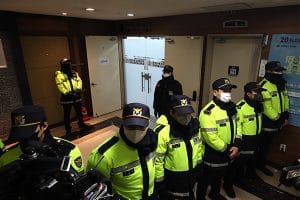
On 18 January, the National Intelligence Service raided the headquarters of Korean Confederation of Trade Unions (KCTU). What happened, and why? Here is an Explainer.

The moment Kara Taggaoa and Larry Valbuena stepped out of the court for one false charge, they were immediately arrested and taken away by the police on another false charge. We spoke with Kara Taggaoa about her arrest, the red-tagging and surveillance, and dealing with fellow activists being killed, as well as her own organising background and campaigns.

Some analysts of the platform-based gig economy have argued that the potential of gig workers to resist their exploitation is low. I want to show the opposite: it is not only possible to organise drivers to resist precarity - it is already happening.

Platform companies operate transnationally. Should labour movements respond transnationally, too? Over the next few months, we will be publishing a Special Series on Grab in Southeast Asia to understand how Grab operates in different contexts, and what forms workers' organising and resistance have taken in each context.
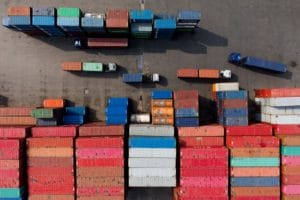
Cargo truck drivers in South Korea have repeatedly gone on strikes to protect their livelihood against a conservative government bent on eroding the power of unions. We explain why their struggles are so important, how the government has wielded its power to attack unions, and what unions are doing to push back against the attacks.
As 2022 drew to a close, we posed a number of questions to activists and researchers. We hope these reflections can deepen our understanding of each other’s work, and stimulate more dialogues on our projects of building workers’ power.
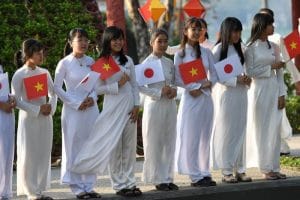
With the hope of escaping from their destiny of joining the manual labour force in Vietnam, Vietnamese youth choose to come to Japan to make a fresh start. Instead, they end up working part-time jobs and get stuck in them after graduation.

Delivery workers in Japan are fed up with Amazon Japan's practices that make accidents and injuries more likely by increasing delivery volume and speed. They are now organising unions to take on Amazon. Here is their story.

How should we build workers' media? With a small staff and volunteers, the MAP radio in Thailand provides both critical information and much-needed entertainment to migrant workers from Myanmar, while navigating logistical and political hurdles. Its experience offers important lessons.
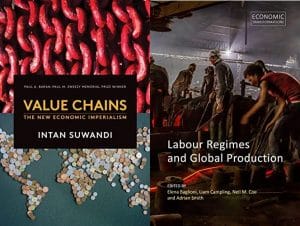
What are the analytical tools with which we can best understand the changing organisation of work in globalised production? This review essay revisits and contextualises critical concepts such as labour regime and value chains as discussed in two recent outstanding publications.

In late October, dramatic images and videos of Chinese workers jumping over factory walls and fences and walking home on foot grabbed global headlines. Why is this happening, and why does the story resonate with so many people?

Stories of workers escaping from Foxconn's Zhengzhou factory in China have been circulating on Chinese social media. Fearful of COVID-19 inflection and confined to the factory compound, some workers panicked and fled home. To bring forward a worker's perspective on why and how they fled, we have translated a worker's account of her experience.
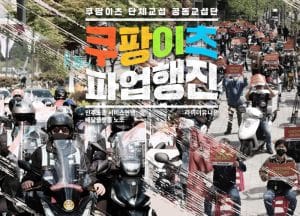
Platform workers are on strike across Asia, pushing against similar unfair and exploitative practices by the companies. This presents immense opportunities for building labour solidarity across countries that may transform their struggle into a global movement.

To understand the shift toward authoritarianism and "shrinking civic space" across Asia, it is imperative to place this phenomenon in the context of the crisis of global neoliberalism that has brought back authoritarian statism. This understanding on the changing nature of global capitalist system is crucial for crystallising a new agenda for labour movement-building from below.
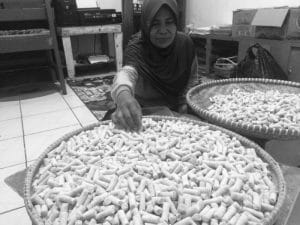
From unhappy childhood in a village, working as a domestic worker, to learning to become a union leader who courageously leads workers' protests, Aan Aminah recounts her inspirational stories in a wide-ranging conversation.
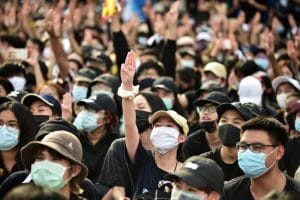
A serious look at the formally organised Thai labour movement's conservatism, and the radicalism of new, autonomous labour organising that emerged out of the youth-led movement in Thailand, with significant implications for the rest of Asia

The declining incomes for platform-based drivers in Indonesia has trapped many in debt, as they work long hours to simply provide for their families. Some have taken their own lives under financial pressures, while others are engaged in resistance against the dire conditions.
Demonstrating clear discontent over their work conditions, the latest research on Thai gig workers paints a nuanced picture about their most urgent concerns, and the form of actions workers are willing to take.
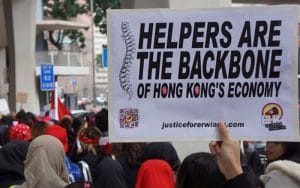
More than 300,000 foreign domestic workers are vital to sustaining Hong Kong society, yet their existence is almost invisible, their voices marginalised, and concerns sidelined. We spoke to FADWU about their campaigns to protect domestic workers' rights.
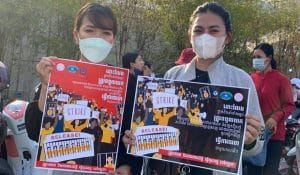
The striking workers, having held out for so long against employer and government attacks, need international support and labor solidarity as urgently as ever.
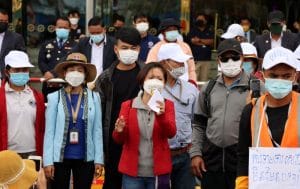
The year-long struggle is not only about protecting workers from layoffs, but also the rights of workers to have a union and to protest injustice. ALR spoke to two key union leaders leading the fight.
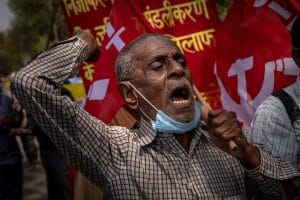
General strike in India has become almost an annual affair, and shows the astonishing mobilising power of trade unions, yet their political power to win progressive labour reforms are in decline.
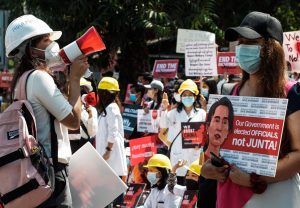
Working conditions are worse, wages are lower and space for workplace organising is constricted; yet, it is not a straightforward restoration as workers continue to organise.