Asia’s Striking Decade: Integration into Global Capitalism and Making of Working Class (1990s-2000s)
Editor’s Note: In Part Two, we focus on the interdependence and dialectics of liberalisation and the emergence of the working
Editor’s Note: In Part Two, we focus on the interdependence and dialectics of liberalisation and the emergence of the working
Editor’s Note: We launched the Season Two of the Continent of Resistance Podcast at the beginning of 2025. We were

The monsoon season is a great time for reading (and watching and listening). We have asked a few of our
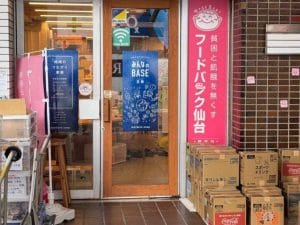
Amidst swathes of farmland and fishing ports, Sendai City in Miyagi Prefecture, Japan, felt uniquely tranquil. For the visitor, it

In recent years, governments across Asia have been amending labour laws, not to offer more protection to workers, but to reduce existing protection.
State Regulations, Migrant Protests, Local Support, and Other Important Events from the Mid-1980s to the Present
Taiwan’s regime of temporary migrant labour was formalised as a kind of “guest worker” program in 1992, and it has
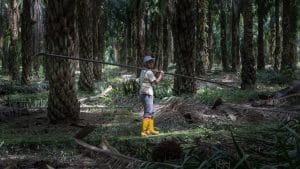
"We advocate for shifting from irregular migration to commuting migration. Instead of criminalising mobility, let’s support the systems migrants already rely on—kinship ties, housing arrangements, and informal transport." - Abu

What role can workers play in advancing democracy? I want to distinguish between two concepts: democratisation from above and democratisation

Antonia López* takes public transportation to pick up her six-year-old son, Camilo, from school in a suburb of Santiago. At

The organising practices of Thai riders illuminate the next frontiers of worker power. This power will not be built solely through centralised formal coalitions. Instead, it will emerge from messy, place-based experiments.

The growing popularity of job-resigning proxy services in Japan reveals deeper issues in Japan's labour market and working culture.

This powerful account by an Indonesian domestic worker and a leading advocate for domestic worker rights is a testament to a methodology rooted in dignity and agency.

The question of recognition is foundational. Organising power comes not only from protests or petitions but also from forcing institutions to acknowledge riders as workers.

The decline in demand, the economic crisis and the pandemic have regularly led to factory closures in Sri Lanka's garment sector. The garment sector is bracing itself for a storm. Unions have come together and formed alliances to discuss the impact and prepare itself.

Where labour once found relative cohesion in large factories or traditional offices, the rise of digital and platform-based labour adds further fragmentation, governed by inscrutable algorithms and hidden supply chains.
In merely a decade, the rise of platforms in Asia has profoundly transformed the lives of millions of workers.

SAVE THE DATE Our Shared Struggles An East Asia Labor Exhibition & Exchange October 3-11, 2025 Tokyo, Japan at Sophia

In this extended interview, Kim Ji-su, the Secretary General of the South Korean Rider Union, reflects on how real change often begins in the cracks—among the most precarious, the most excluded, and the most committed to building something new.
The new semester of Asian Labour School is now open for registration. For the March-June 2025 semester, we will be
Welcome back to Season 2 of our podcast series, Continent of Resistance. Over the next 6 episodes, we will focus

Critiquing acts of protest or resistance is commonplace in the world of social movements. However, in the context of social
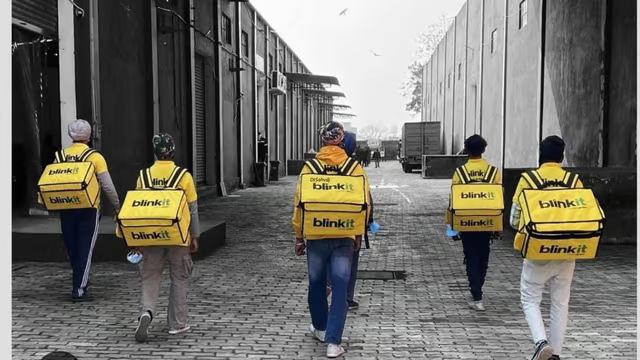
On January 8th, 2024, a distressing incident unfolded at Blinkit’s Panchsheel Vihar outlet, as workers were abruptly notified of significant

In much of Asia, gig work is highly individualised, and algorithmic management fragments the labour process, diminishing workers’ structural power.

Weeks of mass protests led to the downfall of the Sheikh Hasina government in Bangladesh on August 5, 2024. The
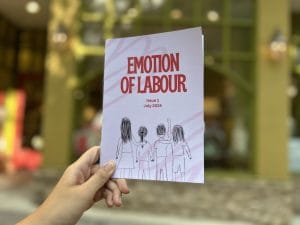
Editor’s Note: Asia’s labour movements have a gender problem. Women organisers and leaders are often doubly burdened with domestic and reproductive

Low-wage migrant workers in Singapore have long suffered from a litany of abuses – low, stagnant, and unpaid wages; unreported
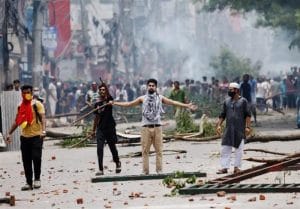
Editor’s Note: After weeks of protests in July and August during which the security forces killed hundreds of protesters, Bangladesh’s

Editor’s Note: On the afternoon of September 19, 2021, the Chinese feminist journalist Huang Xueqin and labor activist Wang Jianbing
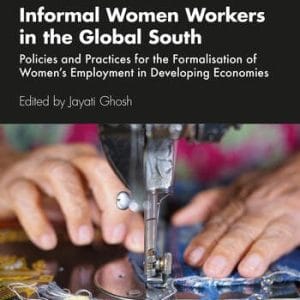
Book Review: Informal Women Workers in the Global South: Policies and Practices for the Formalization of Women’s Employment in Developing