On 9 July 2025, India witnessed one of the largest general strikes in world history. A Bharat Bandh (“nationwide shutdown”) was called by a joint platform of ten central trade unions, allied farmers’ groups, and student organisations to protest the government’s anti-worker, anti-farmer, pro-corporate policies.
The response was staggering: an estimated 250 million workers participated, bringing the country to a near standstill. From the industrial belts of Jharkhand to the ports of Kerala, and from coal mines in Assam to city streets in Delhi and Mumbai, workers and peasants marched, blocked roads, and halted work in a united display of dissent. Major public services – banking, transport, postal, mining, and manufacturing – were disrupted or completely shut down across many states. The strike’s impact on public life was unmistakable.
The general strike stood out for its unity and inclusiveness. While India has witnessed broad-based joint actions in the past, this strike deepened and extended that tradition by drawing together an even broader coalition across sectors and regions. All major trade union federations – including unions with diverse ideological traditions – left, centrist, and independent – came together to present a united front. The breadth of participation – from garment workers in Punjab to white-collar bank employees – modelled a rare inter-sectoral and intergenerational solidarity.
The demands raised reflected the broad coalition. Top of the list was the repeal of four new labour codes, which unions argued would dilute worker protections and collective bargaining rights. Protesters also decried policies of privatisation and outsourcing of public services, attacks on minimum wage and social security, rising unemployment, and even curbs on civil liberties. It was a rallying cry for workers’ rights and economic justice amid neoliberal reforms.
The International Trade Union Confederation (ITUC) and global union federations lauded the strike, seeing it as part of a worldwide pushback against austerity and authoritarianism. Indeed, the sheer scale of 250 million participants, a figure repeated from a November 2020 all-India general strike, was unparalleled globally, underscoring India’s position at the forefront of mass labour mobilisations.
Although the government did not immediately concede to the demands, the strike’s impact was tangible: it sparked parliamentary debates, garnered wide support from civil society, and reminded policymakers that India’s working class remains a force to be reckoned with.
The Bharat Bandh marked a watershed moment that reaffirmed the power of collective action in India’s democracy.
Situating Strikes in Global History
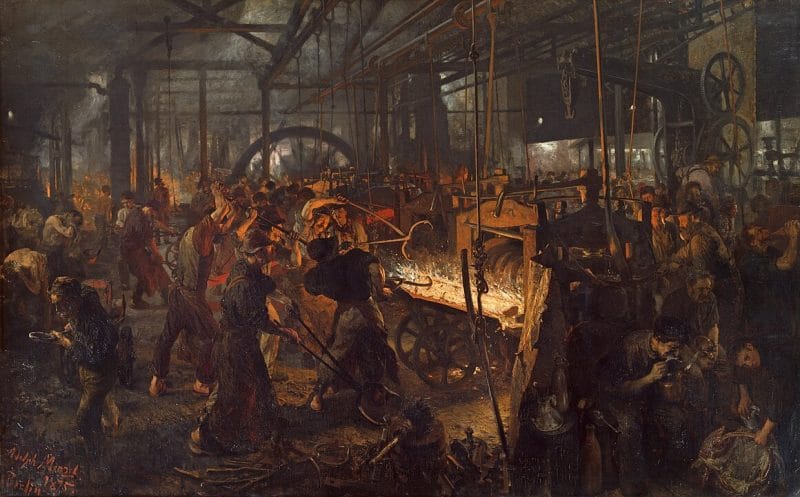
The significance and impact of the 2025 Bharat Bandh find echoes in the global history of strikes. With the rise of industrial capitalism, strikes emerged as a defining feature of modern labour movements. By the 18th century, artisans and wage workers were wielding strikes to demand fair pay. In 1768, journeymen tailors in New York City downed their tools to oppose a wage cut – the earliest recorded strike in America. Around the same time, in London’s docks and print shops, workers were walking off the job in what were then novel and controversial acts of defiance. Such events signalled that the Industrial Revolution’s exploitative conditions would not go unchallenged.
By the late 19th century, massive strikes were forcing social reforms. The Belgian general strikes of 1886, for example, were spontaneous uprisings against desperate working conditions. Though met with repression, they pressured authorities into enacting the nation’s first labour laws on wages and safety. In the United States, the Great Railroad Strike of 1877 saw over 100,000 rail workers halt transport nationwide in protest of wage cuts, an upheaval that, despite being crushed by force, spurred the growth of national labour unions and labour-friendly politics.
Strikes have not only been about wages and hours – they have also been catalysts for broader political transformation. A landmark example was the Gdansk Shipyard strike of 1980 in Poland, where 17,000 shipyard workers, led by Lech Walesa, occupied their workplace, demanding independent unions and economic justice. In just weeks, the communist government buckled and signed the Gdansk Agreement, legally recognising solidarity, the Eastern Bloc’s first free trade union. This unleashed a wave of popular dissent that ultimately helped topple authoritarian rule in Eastern Europe.
Similarly, in the Soviet Union, a wave of coal miners’ strikes in 1989 brought 400,000 miners out across Russia, Ukraine and Kazakhstan, combining economic grievances with calls for political change. It was the largest strike in Soviet history and the first conducted legally. It shook the foundations of Soviet authority and was credited with hastening the USSR’s disintegration and the push for democracy in the region.
From Europe to Latin America to Africa and Asia, the simple act of saying “we will not work under these conditions” became an inflection point for social progress. When workers collectively withdraw their labour, they not only press for immediate economic gains but often reshape the political landscape. This global context provides a backdrop for understanding how strikes evolved in India – the weapon of the strike has been wielded since colonial times in pursuit of both labour rights and national freedom.
Strikes in India: From Anti-Colonial Freedom Struggle to the 21st century
India’s own history of strikes is deeply intertwined with its broader fight against exploitation and oppression. Under British colonial rule, exploitative labour practices in plantations, mills, and railways led Indian workers to organise and agitate very early on. By the late 19th century, nascent worker associations, such as the Bombay Mill-Hands Association (1890), had formed to protest deplorable conditions in textile mills.
The early 20th century saw an efflorescence of unionism: the Madras Labour Union was founded in 1918, and in 1920 the All India Trade Union Congress (AITUC) – the country’s first national trade union centre – was established. These developments gave labour discontent a structured voice.
Notably, many strikes in the 1920s and 1930s were not just about workplace grievances but were also aligned with India’s freedom struggle. Textile workers in Bombay, railway workers, and others went on strike in solidarity with the Non-Cooperation and Civil Disobedience movements, seeing their fight as part of the struggle for independence from colonial rule.
A milestone was the Trade Unions Act of 1926, which, for the first time, legally protected the right of unions to organise and, to some extent, to strike. This law, won after years of agitation, acknowledged that labour’s collective action was a legitimate force – a significant concession by colonial authorities under pressure.
After independence in 1947, the new Indian state initially adopted a pro-labour stance in law, but industrial conflicts did not disappear – they evolved and shifted in form and scale.
The 1950s and 1960s saw labour disputes move from local mill-level issues to nationally organised, politically influenced conflicts, as large party-affiliated unions consolidated and the state itself became a major employer. The economy was mixed, combining state-owned industry with private enterprises, and, for a time, industrial disputes were generally managed through dialogue or tribunals established under laws such as the Industrial Disputes Act (1947).
However, by the late 1960s, discontent was simmering among government and public sector workers, who felt wages and rights were not keeping pace with rising prices and expectations. In 1968, over a million central government employees staged a one-day nationwide strike – an unprecedented action by public servants that was met with harsh repression: thousands of employees were arrested for defying Essential Services laws. This episode signalled that even in independent India, the state was willing to clamp down on strikes, and yet workers were willing to risk repression to be heard.
The watershed moment in India’s labour history came with the 1974 All-India Railway Strike. Led by the fiery socialist leader George Fernandes, about 1.7 million railway workers — virtually the entire workforce of Indian Railways — went on strike in May 1974, demanding better pay, a shorter working day, and recognition of their union. The strike lasted 20 days and brought the nation’s transport network, the lifeline of the economy, to a standstill. It was, at the time, the largest industrial action in the world, and it shook the government of Prime Minister Indira Gandhi.
The administration’s response was swift and severe: thousands of workers were jailed, dismissed, or otherwise penalised as the government invoked national security and cracked down hard. Ultimately, the railway strike was crushed without immediate gains for the workers. In fact, it was a prelude to Gandhi’s declaration of Emergency in 1975, under which most union activities were curbed.
Yet, the 1974 strike’s legacy looms large. It exposed the fault lines between a centralised state and the labour movement, demonstrated the organisational might of India’s unions, and became a cautionary tale about the lengths to which authorities would go to break a strike. Many historians consider it a turning point: after 1974, the government grew more wary of militant labour unrest, and unions, in turn, learned hard lessons about the need for unity and strategy when confronting the state.
The post-1970s period brought new challenges and transformations. In 1982, Bombay (Mumbai) was rocked by a textile mill workers’ strike led by Dr Datta Samant, involving around 200,000 workers. The strike dragged on for over a year without resolution, ultimately ending in defeat and leading to the closure of many mills – a blow from which the trade union movement in Mumbai never fully recovered. The Bombay textile strike highlighted the limits of prolonged industrial action when faced with intransigent employers and changing economic realities, as industries began shifting away to avoid union strength. This sobering chapter paralleled a broader decline of industrial union power in the 1980s.
By the early 1990s, India embraced economic liberalisation, ushering in globalisation, privatisation, and a dramatic expansion of the non-unionised informal sector. These changes fragmented the workforce and put unions on the back foot – many traditional unions lost members in privatised or closed industries, and new types of workers (contract labour, gig workers) were harder to organise.
Despite this, India saw the phenomenon of general strikes rise to prominence as a tool in the liberalisation era. Joint calls by multiple unions for nationwide strikes became a way to protest policies seen as anti-labour and anti-poor. In 1991 – the year of the first major economic reforms – and throughout the 2000s, central trade unions occasionally set aside political differences to launch one-day national strikes. These were usually symbolic “warnings” to the government, but over time their scale grew. In September 2010 and February 2012, multi-union general strikes each reportedly mobilised over 100 million workers for a day. This trend culminated in the September 2016 general strike, which unions claimed drew around 180 million participants, and then the 26 November 2020 all-India strike, which involved a record 250 million workers and farmers, making it the largest strike in history up to that point.
The 2020 strike – like the 2025 one described earlier – was a joint action against new and regressive labour codes, the privatisation of state enterprises, and the lack of social protections. While such one-day actions did not immediately force policy reversals (the 2020 strike did not stop the passage of the labour codes, for example), they demonstrated the capacity of Indian unions to mobilise on a massive scale, even in an era of gig work and precarious employment. In many ways, these recent strikes echo the spirit of earlier labour agitations: they are broad-based, often tying worker rights to larger questions of economic justice and democracy, and they rely on collective solidarity as a counterweight to state and corporate power.
Through these episodes – from colonial textile mills to 21st-century nationwide strikes – one can trace an evolution of the strike in India. The objectives of strikes expanded from singular workplace issues to sweeping social and political demands. The composition of striking groups also widened, bringing in informal-sector workers, agricultural workers, and even students, alongside formal industrial labour.
Beyond Romanticism and Pessimism
The general strike has become a hallmark of India’s labour movement. In a vast and diverse workforce like India’s, with dozens of trade union federations often aligned to different political ideologies, a united strike sends a powerful message of worker solidarity. It amplifies the voice of labour by pooling together demands across sectors: industrial workers, public sector employees, farmers, informal workers, and others find common cause.
The general strikes of 2020 and 2025 were jointly called by ten central trade unions spanning the political spectrum from left to centrist, representing millions of members. This unity gives labour a stronger bargaining position and greater moral authority in confronting government policies. It also helps break the stereotype that strikes are only about narrow, sector-specific grievances – the general strikes are usually framed around broad economic and social issues that affect a majority of the population, such as privatisation, price rises, unemployment and dilution of labour laws.
The general strikes have also proven to be a tool for movement-building. They often bring into the fold groups beyond formal unions – such as students, women’s organisations, and civil society groups – creating a broader coalition for change. During the 2025 general strike, student unions and farmers’ groups marched alongside trade unionists, blurring the line between a “labour strike” and a general people’s protest. This kind of alliance-building can seed longer-term solidarity; relationships formed in the general strikes often carry over into other struggles (for example, trade unions supporting the farmers’ movement, and vice versa). In a society fragmented by occupation, caste, region, and religion, the image of millions of diverse citizens uniting in a strike is a powerful narrative of collective power from below.
However, it is important to critically examine their complexities and limitations, moving beyond any romanticised image of perpetual victory or, conversely, a cynicism that they achieve nothing.
Firstly, while the headline numbers are impressive, sustaining such unity is challenging. Unions in India have differing priorities and political allegiances; coming together typically requires extensive negotiation and often occurs only in response to particularly egregious policies, such as the recent labour law overhauls. The fact that the Bharatiya Mazdoor Sangh (BMS, or Indian Workers’ Union, which is aligned with the ruling party) stays out of most joint strikes indicates that unity is incomplete. Their absence reduces the overall pressure that such actions can generate.
Moreover, the very nature of a one- or two-day strike is symbolic; it demonstrates resolve but often does not cause sufficient economic disruption to force the government’s hand immediately. Critics argue that such strikes have become ritualised – a day of protests and halted work, followed by business as usual. Indeed, successive governments have shrugged off one-day strikes, especially if they don’t significantly hurt key economic interests or if they expect the momentum will fizzle out afterwards.
There are also structural hurdles. India’s workforce today is predominantly informal. Most workers lack job security, and many are poor; asking them to strike – and lose a day’s wages – is a big ask. The success of recent general strikes in mobilising informal workers – gig drivers, construction labourers, and street vendors – is mixed and often dependent on local activist networks. In some cases, the strike’s impact is concentrated in states or sectors where unions are already strong, such as public sector banks and transportation. In contrast, large swathes of the private corporate sector and informal economy continue to work as usual, diluting the overall effect.
Additionally, state repression and legal barriers pose limitations: laws like the Essential Services Maintenance Act (ESMA) can be invoked to ban strikes in some industries; workers in precarious jobs risk dismissal if they join protests; and there have been instances of mass arrests and intimidation, such as during the 1974 railway strike or even detentions during 2025’s general strike.
Crucially, there is a partial disconnect between such massive street mobilisation and the ability of unions to organise workers at the workplace level. The capacity to mobilise tens or even hundreds of millions for a one-day general strike reflects the broad political reach of unions and their alliances, rather than a uniformly strong workplace-level organisation. While such mass actions demonstrate symbolic and societal strength, they do not always translate into equivalent bargaining power in the workplace, where union presence is often uneven—especially in the informal and private corporate sectors.
Yet, despite these challenges, the general strikes serve to educate and politicise a new generation of workers about their rights and the power of unity. Each large strike leaves behind a residue of solidarity and awareness – for example, the general strikes of 2020 and 2025 heightened public discourse on issues like labour law reforms and income inequality, and likely contributed to broader social movements. The 2020 strike, which coincided with a massive farmers’ protest, helped draw urban attention to rural distress.
By bringing grievances to the streets in a peaceful manner, they can compel governments to engage in dialogue or make partial concessions. Indeed, while the four new labour codes were not repealed after the 2020 and 2025 strikes, implementation of those laws has reportedly slowed, and some pro-labour tweaks were introduced under pressure. State governments, too, have hesitated or delayed privatisation moves amid strong union opposition.
In analysing the general strikes, we need a nuanced view. These strikes are neither the romantic harbinger of instant revolution nor a pointless charade. They are better seen as part of a continuum of struggle – a high-profile tactic that complements other forms of organising, such as local strikes, litigation, political lobbying, and community campaigns. Their relevance endures because the fundamental issues – fair wages, job security, social protection, and workers’ voice in policy – remain pressing in India.
However, their limitations remind us that a strike is a means, not an end in itself. To translate the symbolic power of 250 million people on strike into tangible change requires follow-through: continuous organising, building political alternatives, and, if demands are repeatedly ignored, sometimes escalating strategies.
Strikes are an essential democratic instrument. They may temporarily interrupt daily routines and economic activity, yet do so to create space for dialogue, safeguard dignity, and protect hard-won rights. They strengthen democracy by giving voice to those who are often unheard. The challenge moving forward is to ensure this tool is used strategically and responsibly, and that it evolves as the nature of work changes. As technology, gig economies, and climate change reshape the world of work, new forms of worker collectivism will emerge, and strikes, too, will take new forms. Yet their essence will remain the same: when workers and citizens unite in solidarity, they are unstoppable, and they can bend the arc of history a little more towards justice.